
Gym Smart Equipment Control Box: Application Guide for Fitness Facilities
Gym Smart Equipment Control Box: A Problem-Solving Application Guide for Fitness Facilities
A fitness floor concentrates an unusual mix of electrical loads into one room. Treadmills and ellipticals draw continuous motor current with frequent starts and stops, air conditioning runs for hours, lighting and smart mirrors follow their own schedules, and access control has to keep working when everything else is switched off. When one wall-mounted board serves all of it, the specification question is not which enclosure is cheapest — it is which one keeps the 06:00 class running when a single treadmill motor develops a fault.
This guide is written for gym operators, facility managers and the electrical contractors who wire their sites. It covers load planning at AC 220V with 16A/32A/63A incoming ratings, overload, short-circuit and leakage protection with grounding resistance ≤4Ω, the IP54 wall-mounted enclosure and its DIN-rail internals, waterproof cable entry, and the optional timer, WiFi/4G, equipment-linkage and energy-monitoring functions that turn the box into a control point rather than a junction box. Product references describe the Yinlu Gym Smart Equipment Control Box.
What actually goes wrong in gym electrical installations
Most failures on a fitness floor trace back to a handful of design decisions rather than to the machines themselves.
- Shared circuits that were never planned. Cardio machines, lighting and air conditioning are commonly connected to whatever spare ways exist. When the air conditioning starts in an afternoon peak, that shared circuit carries a load it was never sized for.
- Motor starting current. A treadmill motor does not draw a smooth current. Starts and belt-load changes produce peaks above the running value, and a protection device that ignores this either trips early or gets “fixed” with a larger fuse.
- Moisture and dust. Sweat, cleaning water and dust collect around floor-level cable entries. A board that is not sealed, or whose entries are open holes, becomes a leakage path.
- Nuisance leakage tripping. Once an RCD trips intermittently, staff often bypass it. That is where a protection problem becomes a safety problem.
- No single isolation point. Maintenance needs to isolate one zone without shutting the whole floor, and the isolation point has to be lockable.
- Unlabelled circuits. A box without a circuit schedule turns every fault-finding visit into an hour of trial and error.
- Power and control wiring in the same entry. Access-control and monitoring cables sharing a gland plate with power cables is exactly the layout that produces interference and confusing faults later.
None of these are exotic failure modes. They are the predictable result of treating a gym as a generic commercial fit-out instead of a motor-heavy, moisture-exposed, partially unattended environment.
Where a gym control box sits in the wider control panel market
Control panels are not a niche category, and the demand context matters when a gym operator compares quotes. Research and Markets estimates the global electrical control panel market at USD 60.4 billion in 2026, projected to reach USD 98.6 billion by 2036, a CAGR of 5.0% across 2026–2036. Custom Market Insights places Asia Pacific as the largest regional market, with 38.9% revenue share in 2026, and sizes the low-voltage distribution panel segment at USD 1.8 billion in 2026, rising to USD 2.9 billion by 2035 at a 5.9% CAGR.
The two market figures use different scopes — an all-in control panel market versus a voltage-specific segment — so they should not be added together or read as a ranking of one product type over another. What they do establish is scale: a buyer is choosing inside a large, competitive supply market, where a low quotation is not by itself evidence of suitability.
On the compliance side, UL 508A is the benchmark standard for industrial control panels in North America, while IEC 61439 is the international reference. Which one applies to a fitness facility depends on the country of installation and on the authority having jurisdiction, not on supplier preference. Ask the certification question early, in writing, against the exact configuration being quoted.
The solution: what a gym-specific smart control box contains
Yinlu is a Dalian-based electrical control equipment manufacturer that produces sheet metal fabrication, enclosures, electrical control cabinets, intelligent control boxes and electrical distribution equipment, and that also accepts OEM and ODM orders. Its Gym Smart Equipment Control Box is a wall-mounted, IP54 distribution and control enclosure intended for gym equipment power control, lighting scene control, access control linkage and smart fitness system integration.
The documented configuration is what makes the box usable as a problem-solving device rather than a steel shell:
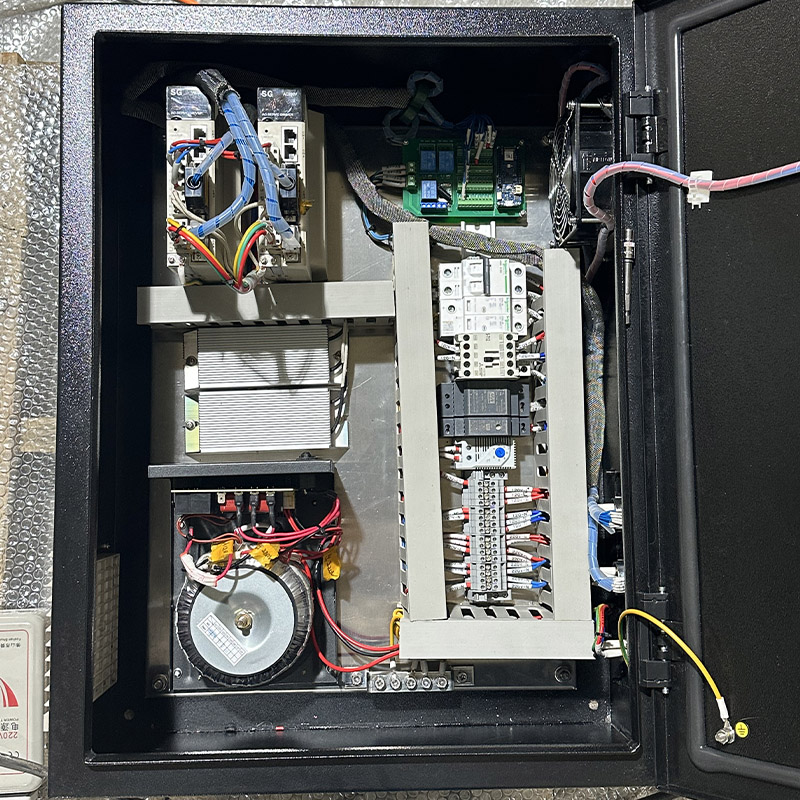
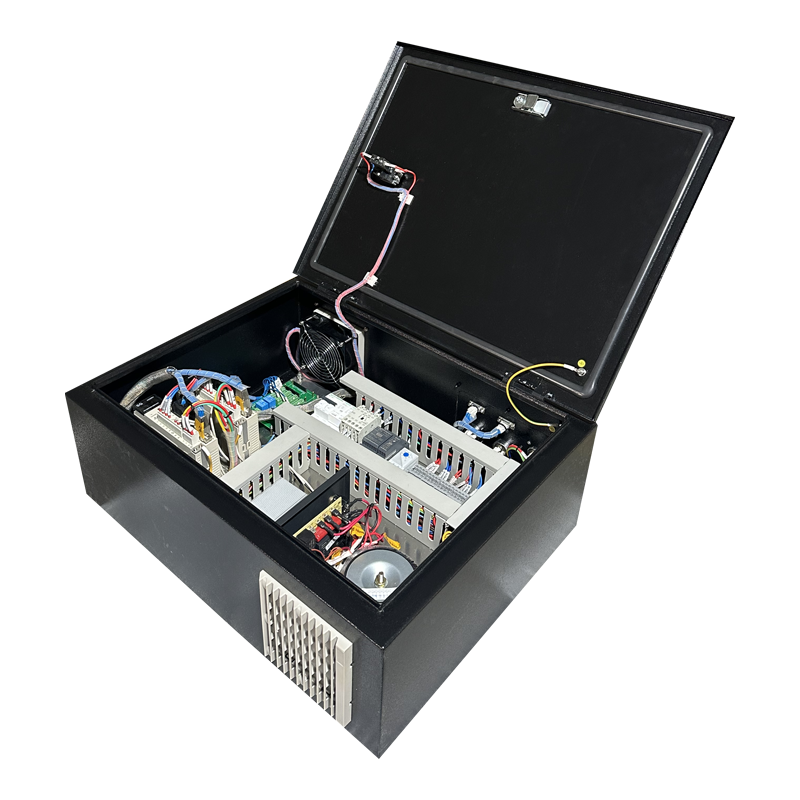
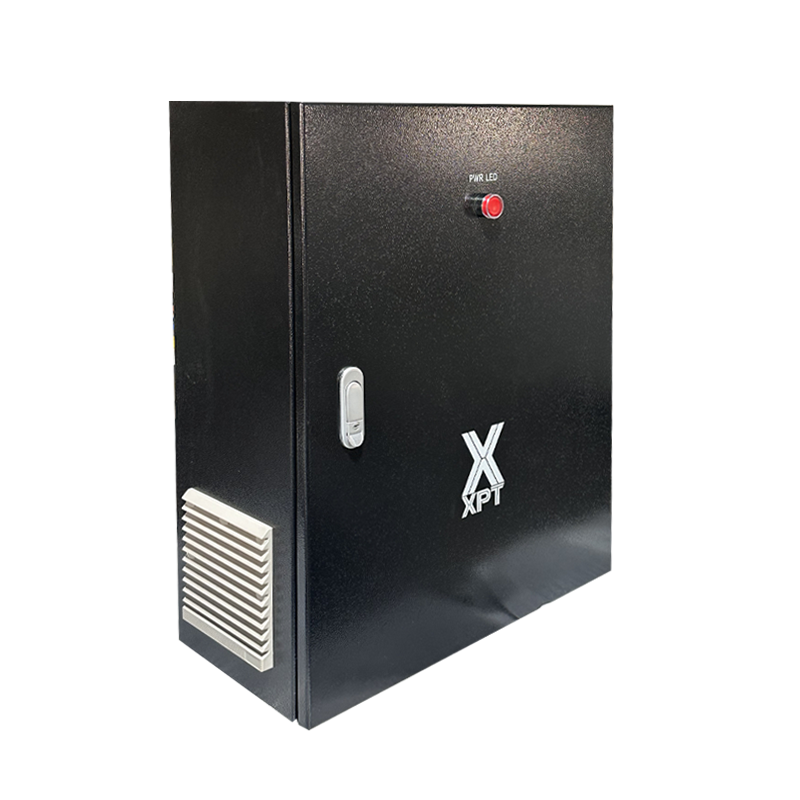
- Enclosure: 2.0mm cold-rolled steel, phosphating derusting plus electrostatic powder coating, single door with plane lock (password lock optional), EPDM seal on the door frame, internal heat dissipation louver.
- Internals: built-in DIN rails, terminal blocks, grounding bar and MCB/RCD modules; relays, PLC and smart control modules can be integrated.
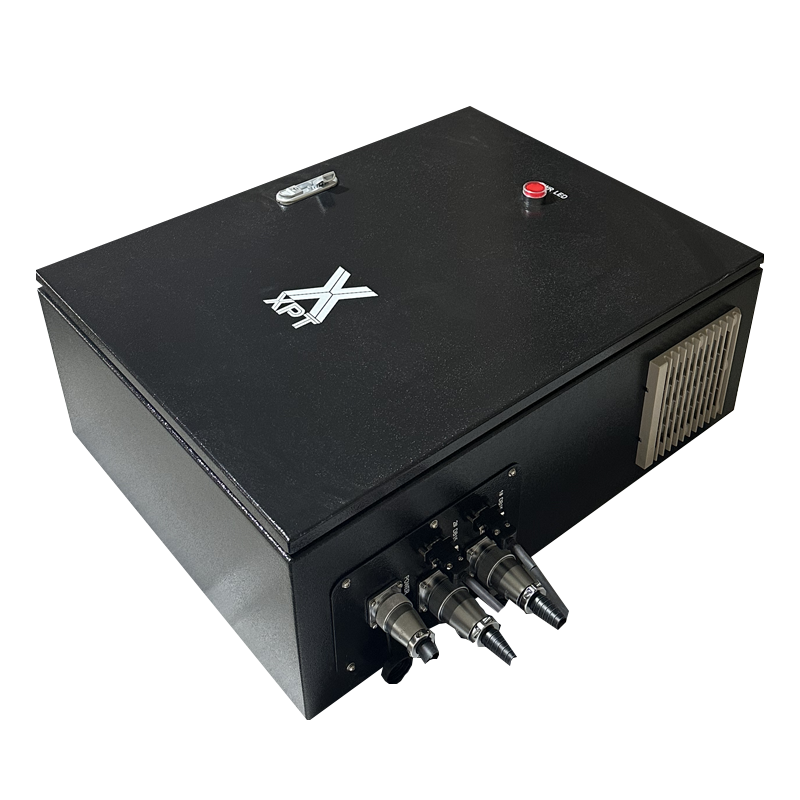
- Cable entry: pre-drilled cable holes at the bottom or back, fitted with waterproof cable glands, so power and control wiring can be routed separately.
- Electrical rating: AC 220V, with 16A, 32A or 63A incoming ratings selected according to the total power of the gym equipment.
- Protection: overload protection, short-circuit protection and leakage protection built in; over/under-voltage protection optional.
- Smart functions: timer switch, remote control over WiFi/4G, equipment linkage and energy consumption monitoring can be integrated.
- Grounding: reliable cabinet grounding with grounding resistance ≤4Ω.
- Optional accessories: cooling fans, smart control modules, remote monitoring modules, indicators and labels.
- Controlled equipment: treadmills, elliptical machines, strength equipment, lighting, air conditioners, access control and smart mirrors.
- Installation accessories: expansion screws, wall brackets, cable glands, cable ducts, cable ties and labels.
Step-by-step: specifying the box for a real facility
Step 1 — Inventory the loads and zone the floor
Start with a written load list, not a rule of thumb. Walk the floor and record every item that will be fed from the board: each treadmill and elliptical with its nameplate input rating, strength-area socket outlets, lighting circuits, air conditioning, access control, smart mirrors and any signage or audio equipment. Group them into zones — cardio row, free-weight area, studio, reception and changing rooms — because zoning is what allows one zone to be isolated while the rest of the gym keeps trading.
Keep the control side of the list separate. Access control, monitoring and smart-mirror data wiring are weak-current items; on this box they enter through their own waterproof glands so that power and control cables do not share a route.
Step 2 — Convert equipment power into an incoming rating
The box is available with 16A, 32A or 63A incoming ratings at AC 220V, chosen against the total power of the gym equipment. A useful starting ceiling can be calculated from P = U × I, which at 220V and unity power factor gives approximately 3.5 kW at 16A, 7.0 kW at 32A and 13.9 kW at 63A. These are calculated ceilings, not measured outputs: they mark the upper bound a circuit of that rating can carry before its protection operates, and they assume unity power factor and a resistive-equivalent load. Motorised cardio equipment does not behave like a resistor, so treat the ceiling as a limit to stay well below rather than a target to design up to.
In practice, sum the nameplate input ratings of the equipment the board will actually feed, add the planned lighting and air-conditioning load, and then allow for expansion that the operator already knows about — a second cardio row, a studio conversion, an added air-conditioning unit. Choose the next available rating above that total. Where the total approaches 63A, the better answer is usually to split the floor into two zoned boxes rather than to squeeze everything onto one supply.
Where local wiring regulations permit demand factors, they may be applied, but only as the applicable code and the responsible engineer confirm them; a gym’s peak is set by class schedules and can be far higher than an office-style diversity assumption suggests.
Step 3 — Select overload, short-circuit and leakage protection
Inside the box, MCB modules handle overload and short-circuit protection and RCD modules handle earth leakage, all mounted on the internal DIN rail. Match each MCB to the circuit it protects — not to the biggest machine on the floor — and keep the circuit schedule aligned with the physical layout so a tripped device can be traced without opening every enclosure on site.
Leakage protection deserves specific attention in a gym. Several machines on one RCD share their standing leakage, and moisture raises it further. Splitting the floor across more RCDs, and keeping each RCD’s downstream equipment consistent, reduces nuisance tripping without weakening protection. Optional over/under-voltage protection is available where the incoming supply is unstable, because supply excursions can damage treadmill control boards and smart-mirror electronics that were never designed to absorb them.
Step 4 — Fix the grounding reference at ≤4Ω
Grounding is a specification item, not an installation afterthought. The box is designed for reliable cabinet grounding with grounding resistance ≤4Ω, and the internal grounding bar gives every circuit a defined earth termination instead of a daisy-chained collection of lugs.
The measurement is taken on site after installation and recorded in the handover file. If the reading exceeds 4Ω, the earth path needs attention before the gym opens — no amount of protection hardware compensates for a poor earth reference, and an unreferenced earth is often the hidden reason an RCD trips on a humid morning and behaves perfectly the next day.
Step 5 — Match the enclosure to the room
IP54 is the documented rating of this wall-mounted box. That means protection against dust ingress at a level that does not interfere with operation, and protection against water splashing from any direction — a sensible match for a wall position above floor level, away from direct hose-down and away from the cleaning trolley’s path. The 2.0mm cold-rolled steel body is phosphated and powder-coated, the door frame carries an EPDM seal, and an internal heat dissipation louver manages warmth inside the enclosure.
The single door with plane lock keeps the interior closed to members; a password lock is optional where the operator wants to restrict access to authorised staff. Mount the box so the door swings freely, the louver is not blocked by stored equipment, and the bottom cable entries remain above the floor line rather than sitting in the mopping zone.
Step 6 — Plan the internal layout and the cable entry
Layout decisions made before production are far cheaper than changes made after delivery. Reserve DIN rail length for the MCBs and RCDs, keep terminal blocks grouped by zone, and leave spare ways for the circuits the operator will inevitably add. Where the site needs sequence control or remote monitoring, relays, PLC or smart control modules fit inside the same box.
Cable entry follows the same logic. Power cables enter through waterproof glands at the bottom, control cables through a separate gland position, and cable ducts and ties keep the internal routing orderly. Label every circuit at both the device and the terminal, and write the schedule in the language the site electrician actually reads.
Step 7 — Decide which smart functions the site actually needs
The optional layer should be chosen from operational problems, not from a feature list. A timer switch solves the lights-and-air-conditioning problem on a site where staff arrive after the first members; WiFi/4G remote control solves the problem of an unstaffed 24/7 room; equipment linkage solves the “everything is on because nobody switched it off” problem by tying lighting or air conditioning to access-control events; energy consumption monitoring solves the problem of not knowing which zone is driving the electricity bill. Remote monitoring modules and cooling fans are available where the box sits in a warm plant room or where the operator wants status visible off site.
Every option adds wiring and configuration, so specify it at order stage. Retrofitting a smart module into a commissioned board costs more than choosing it up front, and it disturbs a working installation.
Step 8 — Commission, test and hand over
Fix the box with the expansion screws and wall brackets supplied, then verify torque on terminations, insulation resistance on each circuit, and RCD trip behaviour with the test button and an instrument. Measure and record earth resistance against the ≤4Ω requirement. Confirm that indicators and labels match the schedule, demonstrate isolation and locking to the operator’s staff, and hand over a document set that includes the circuit schedule, test results and the installed configuration.
Comparing the three incoming ratings
The table below turns the rating options into a planning view. The calculated ceilings use P = U × I at 220V and unity power factor; they are derived values for planning, not measured performance figures, and final sizing remains with the installer and the applicable wiring regulations.
| Incoming rating (AC 220V) | Calculated single-phase ceiling | Typical scope in a fitness facility | Step up when |
|---|---|---|---|
| 16A | ≈3.5 kW (calculated) | A single zone: a small cardio row plus lighting on dedicated circuits | More than a few motorised machines, or air conditioning added to the same board |
| 32A | ≈7.0 kW (calculated) | Mid-size studio: cardio machines, strength-area outlets, lighting, access control | Continuous multi-machine use through peak classes, or extra HVAC load |
| 63A | ≈13.9 kW (calculated) | Multi-zone club: cardio, strength, lighting, HVAC controls, smart mirrors | The planned load approaches the ceiling, or expansion is already scheduled |
Protection and commissioning checklist
Protection only works as a set. The second table maps each function to the device that performs it and to the check that proves it on site.
| Function | Typical device in the box | What it addresses | Commissioning check |
|---|---|---|---|
| Overload | MCB | Sustained current above the circuit rating | Confirm device rating against the circuit and its connected equipment |
| Short circuit | MCB | Fault current within the circuit | Confirm the device suits the supply and the installation data for the site |
| Leakage | RCD | Earth leakage from moisture, cable damage or equipment faults | Test-button check plus instrument trip test, recorded |
| Over/under voltage (optional) | Optional protection module | Supply excursions that stress treadmill and display electronics | Confirm set points with the operator and record them |
| Isolation | Single door with plane lock; password lock optional | Unauthorised operation of live parts | Demonstrate locking and key control to staff |
| Grounding | Internal grounding bar and terminals | Stable earth reference for every circuit | Measure earth resistance and record ≤4Ω |
Application scenarios: four gym profiles
24/7 unstaffed gym. The dominant risk is unsupervised operation. Remote control over WiFi/4G, a timer switch for lighting and air conditioning, energy consumption monitoring per zone, and a locked enclosure cover the realistic failure points; leakage protection per zone limits how much of the floor goes dark when one circuit trips.
Hotel or residential fitness room. The board usually lives in a service cupboard and is expected to run with minimal attention. Linkage with access control and lighting means the room is powered when it is in use and quiet when it is not, while the IP54 wall-mounted format fits a cupboard wall where a floor-standing cabinet would not.
Boutique studio with heavy strength equipment. Motor load is lower, but socket outlets, lighting scenes and audio equipment multiply. A 16A or 32A rating with clear zoning and labelled spare ways is often the practical answer; the specification effort goes into circuit separation rather than raw capacity.
Large multi-zone club. Cardio, strength, studios, HVAC controls and smart mirrors on one board push the load toward the 63A option, and often beyond the point where a single wall box is sensible. At that stage, two zoned boxes or a floor-standing enclosure with more internal volume becomes the realistic choice.
Boundaries: when the IP54 wall box is not the right answer
A specification is only useful if it also says where it stops. IP54 is not IP65: it is not intended for jet washing, poolside splash zones or outdoor exposure, and a project that needs those conditions should specify a higher-rated enclosure rather than assume the gym box covers it. Where a pool plant room or a chlorinated atmosphere is involved, the manufacturer also produces stainless steel electrical control cabinets in 304 stainless steel at IP54/IP55 for indoor corrosive environments — a different product, chosen for a different condition.
Internal volume is the second boundary. A wall-mounted single-door box with DIN rails, MCB/RCD modules, relays and a smart module has finite space; if the site needs large PLC assemblies, multiple variable-frequency drives or many separate supplies, a floor-standing cabinet is the honest answer, and forcing the wall box simply moves the problem to the installers.
The third boundary is the supply itself. If the calculated load sits above the 63A option, splitting into zones is not a compromise — it is better practice, because it limits the scope of a single trip and lets the operator keep part of the floor trading during maintenance.
Supplier checks before you place the order
Once the technical scope is settled, the remaining risk sits in delivery and consistency. Yinlu operates a 5,000m² facility with 60 employees, a 6-person R&D team, ISO 9001 certification, monthly capacity of 2,000 units, and an export share of 80% across North America, Europe, Australia and Japan. OEM and ODM work is part of the business, customization covers material, colour, logo, size, IP rating, surface treatment, cutouts and mounting, and the minimum order is 1–5 units — which matters for pilot installations and single-site refurbishments before a roll-out.
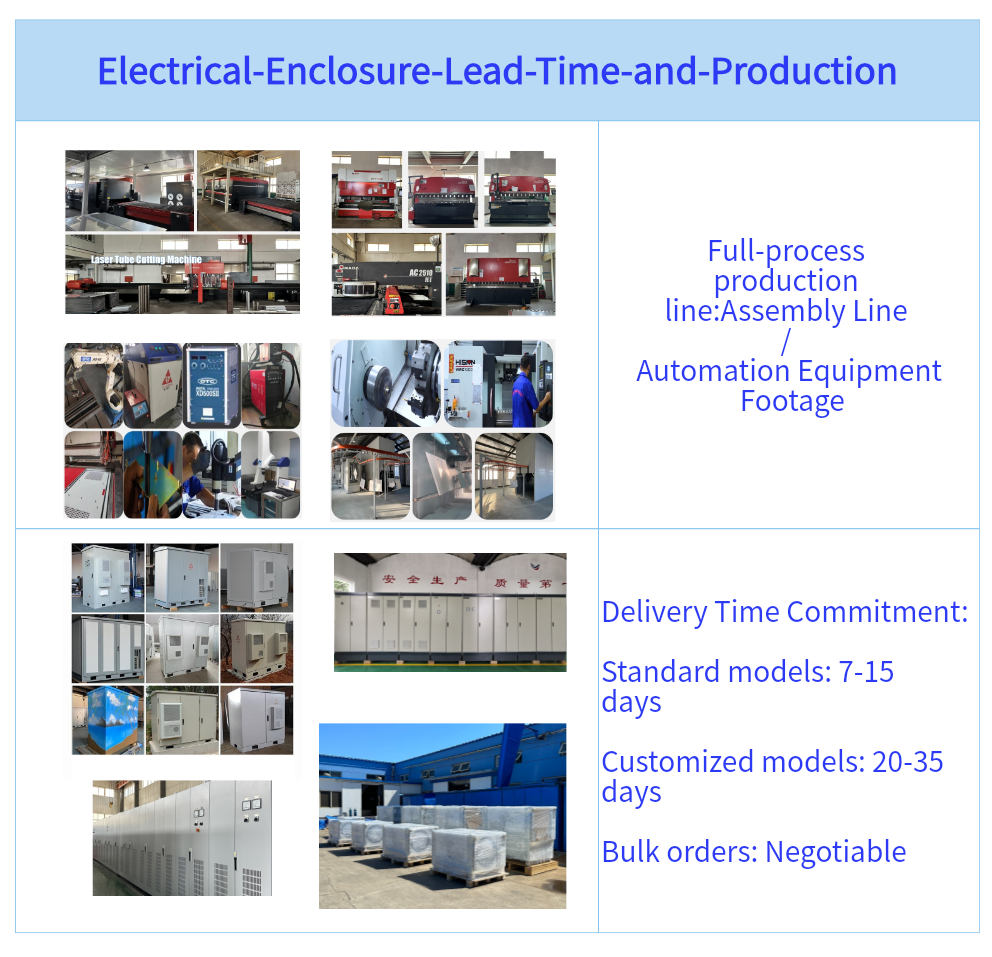
Quality control at that factory follows six stated checks: visual, wiring, function, safety, sealing and packaging. Ask for the records against your configuration rather than against a catalogue model, and ask for the drawing that shows your cutouts, gland positions and label schedule. After-sales support is stated as 7×24 online support with a one-year warranty; compare that with what the site actually needs, particularly if the gym is unattended overnight. Lead time should be quoted per project, since the manufacturer states it as negotiable rather than fixed.
FAQ
What protection and grounding does a gym control box need to pass an electrical inspection?
Three protection functions belong in the board as a minimum set: overload protection, short-circuit protection and leakage protection, all mounted on the internal DIN rail alongside a grounding bar. The grounding requirement for this box is a reliable cabinet ground with resistance measured at ≤4Ω on site. Inspectors typically also look for a circuit schedule, correct device ratings against the circuits they protect, and a lockable enclosure. Because inspection rules vary by country, confirm the applicable standard for your market before the board is built.
Can one wall-mounted box control gym equipment, lighting and access control together?
Yes, within its rating. The box integrates DIN rails, terminal blocks, MCB/RCD modules and space for relays, PLC or smart control modules, and it is documented for treadmills, elliptical machines, strength equipment, lighting, air conditioners, access control and smart mirrors. Power and control cables enter through separate waterproof glands so the weak-current circuits are not routed with the supply cables. The limit is capacity: once the combined load exceeds the 63A/AC 220V option, or the site needs many separate supplies, split the floor into zones or specify a floor-standing cabinet.
How do I decide between 16A, 32A and 63A?
Add up the nameplate input ratings of everything the board will feed, plus lighting and air conditioning, then convert the total into current at 220V. The calculated single-phase ceilings are roughly 3.5 kW at 16A, 7.0 kW at 32A and 13.9 kW at 63A at unity power factor — planning figures, not measured values. Choose the rating above your total and keep margin for peak class schedules and future equipment. Motor loads draw differently from resistive loads, so the final decision belongs with your electrical contractor and the local wiring regulations.
Can the box be customized for our site layout, and what is the minimum order?
Customization covers material, colour, logo, size, IP rating, surface treatment, cutouts and mounting, and the manufacturer accepts OEM and ODM orders. The minimum order is 1–5 units, so a single-site refurbishment and a multi-club roll-out can start from the same specification. Useful customization requests for a gym include gland positions that match the incoming cable routes, cutouts for a specific smart module, and labels or a circuit schedule in the operator’s working language.
What lead time and after-sales support should a gym project expect?
Lead time is quoted per project rather than fixed, so ask for it with your confirmed configuration, quantity and customization list in hand — cutouts, labelling and smart-module selection all affect the schedule. After-sales support is stated as 7×24 online support with a one-year warranty, which suits sites that operate outside office hours. A practical next step is to request a sample or a quotation against your load list, together with the technical documentation for the exact configuration you intend to install; the company brochure can be downloaded here: Yinlu product brochure (PDF).
Conclusion
A gym control box solves a specific set of problems: shared circuits that were never planned, motor starting current, moisture-driven leakage tripping, unclear isolation and unlabelled wiring. The specification path is straightforward once it is written down — inventory and zone the loads, convert equipment power into a 16A, 32A or 63A rating at AC 220V, select MCB and RCD protection deliberately, fix the earth reference at ≤4Ω, match an IP54 wall-mounted enclosure to the room, plan DIN-rail layout and separate cable entry, and choose only the timer, WiFi/4G, linkage and energy-monitoring functions that answer an operational need.
Facility teams that follow this sequence end up with a board the site electrician can fault-find, the operator can lock, and the members never notice — which is exactly what a fitness facility needs from its electrical installation. For configuration details, drawings and OEM or ODM discussion, the manufacturer’s site is Dalian Yinlu Electrical Control Equipment Manufacturer.
Have Questions or Need More Details?
Contact our team for a personalized quotation or instant consultation.
Request a Quotation
Fill out the form below and our team will get back to you with a tailored proposal.
WhatsApp Direct Chat
Prefer to chat in real-time? Message us on WhatsApp for instant assistance & quick answers.
- Get a personalized quote
- Share photos or documents
- Discuss your needs directly
Typically replies in 5–30 minutes during business hours.