
Control Panel Compliance Guide: IP Ratings, Voltages, and Grounding for Regional Installations
Control Panel Compliance Guide: IP Ratings, Voltages, and Grounding for Regional Installations
Control panel compliance is an engineering match, not a paperwork event. A panel can carry a valid CE marking and still fail site acceptance, because its voltage rating, enclosure protection, or grounding design was configured for a different grid, a different environment, or a different safety regime. This guide covers the three variables that decide whether a panel actually complies at the point of installation: regional voltage and frequency, IP protection against the installation environment, and grounding with built-in protection.
Problem Definition: When Compliance Documents Meet Site Conditions
Most compliance disputes happen after purchase, not before it. The buyer confirms the certificate, places the order, and the panel arrives on site — where the installing contractor points at a nameplate voltage, an enclosure rating, or a grounding resistance reading and says it does not pass.
Three root causes account for the majority of these failures:
- Certification scope is confused with installation scope. A declaration of conformity covers a defined product and its declared use. It does not automatically cover every voltage, every enclosure class, or every mounting arrangement a specific project may require.
- One specification is reused across different environments. The same panel design placed in a gym, on a food processing line, and on an exposed outdoor wall faces moisture, dust, and washdown conditions that are not equivalent.
- Grounding and protection settings are treated as installation details rather than acceptance criteria. Grounding resistance targets, overload settings, short-circuit coordination, and leakage thresholds are measurable deliverables. They must be written into the technical agreement before production, not resolved at commissioning.
The practical consequence: for a buyer at the decision stage, verifying compliance means verifying three specific engineering matches — grid to nameplate, environment to IP rating, and safety design to the project's measurable acceptance thresholds.
Industry Background: Where Low-Voltage Control Panels Sit
Low-voltage switchgear and controlgear assemblies are governed internationally by IEC 61439-1:2020, the primary international standard defining general definitions, construction requirements, and verification methods for these assemblies. That standard is the technical baseline; regional grids and site environments are the variables applied on top of it.
Commercially, the category is large and still expanding. Dataintelo projects the global electrical control panel market growing from USD 27.2 billion in 2025 to USD 47.0 billion by 2034, and reports that low-tension (LT) panels held the largest segment share at 45.3% in 2025, with Asia Pacific accounting for a 38.5% revenue share in the same year. Spherical Insights estimated a narrower "electric control panel" definition at USD 6.35 billion in 2024. The wide gap between published figures reflects differences in scope definition rather than disagreement about demand growth, and buyers comparing market reports should check which product boundary each number covers before using it in a business case.
What matters for compliance planning is the direction of that growth: more low-voltage assemblies are being shipped across regions than ever before, which means more panels are being installed on grids and in environments they were not originally designed around.
Detailed Solution: The Three Compliance Pillars
Pillar 1 — Regional Grid Matching: Voltage and Frequency
Regional grid matching is the first gate. A low-voltage switchgear project serving the Kenyan and wider East African market is typically specified around a 440 V / 50 Hz three-phase supply. Panels engineered for a 400 V / 50 Hz European supply or a 480 V / 60 Hz North American supply are not interchangeable with it, even when the main certification is valid.
The failure modes are quiet rather than dramatic. Contactors and coils sized for one voltage can chatter or overheat. Protection devices with fixed curves may trip outside their intended band. Motor overload relays set against a different full-load current will not protect the motor they are attached to. Control transformers with the wrong primary tap deliver the wrong secondary voltage to instruments and PLC inputs.
A second, less obvious case is aviation ground power. Aviation ground support equipment does not run on a utility grid profile at all. It runs on aircraft electrical standards — 115 V / 400 Hz AC and 28 V DC — and typically connects through IEC 60309 industrial sockets. A ground power control panel therefore has to be engineered around a frequency that is eight times utility frequency, with different transformer, filter, and thermal considerations. Treating it as a standard low-voltage distribution panel is a common early-stage mistake.
The buyer-side rule is straightforward: the nameplate voltage, frequency, number of phases, and control-circuit voltage must be confirmed in writing against the actual site supply before drawings are released.
Pillar 2 — IP Ratings: Matching Enclosure Protection to the Environment
An IP rating is a two-digit protection code. The first digit describes protection against solid objects and dust; the second describes protection against water. The three ratings most commonly specified for control panel enclosures behave differently:
- IP54 — dust-protected (not dust-tight) and protected against splashing water from any direction. Suited to indoor areas where incidental splash or light dust is possible.
- IP55 — dust-protected and protected against water projected from a nozzle. A reasonable fit for general industrial floors and moderately demanding indoor installations.
- IP65 — dust-tight and protected against water projected from a nozzle. The usual choice where fine conductive dust, washdown, or outdoor exposure is expected.
The environment, not the budget, should drive the selection:
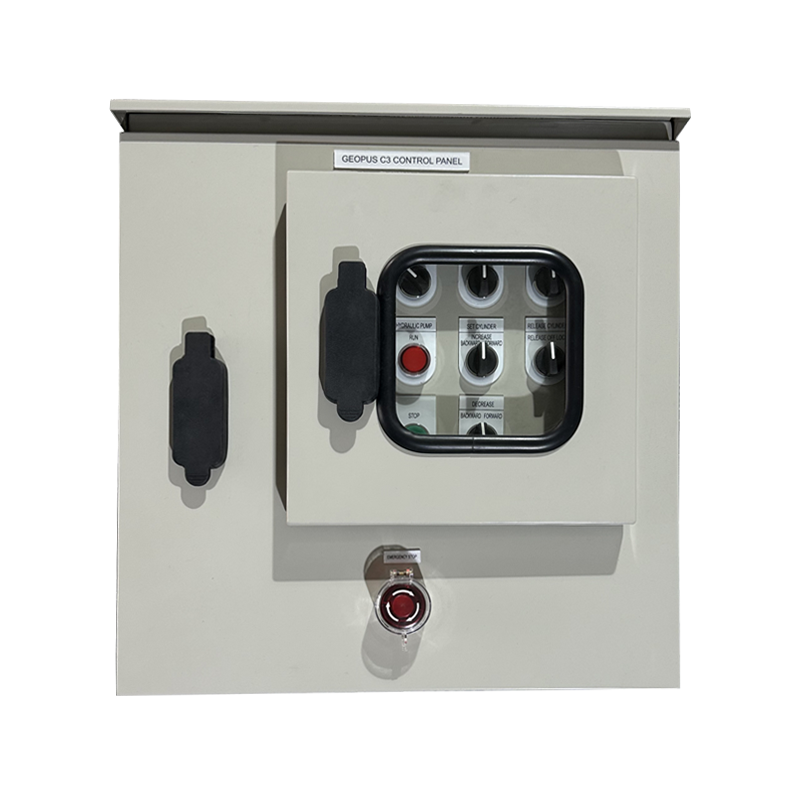
- Gym and fitness installations. Humidity from showers and changing areas, plus airborne lint and cleaning spray, drive the requirement. A wall-mounted enclosure with a sealed gasket and IP54 or better is normally appropriate; a ventilated open-frame panel is not.
- Industrial floors. Machining dust, coolant mist, and periodic hose-down push the specification toward IP55 and often IP65. Metal or conductive dust is the deciding factor — dust-tight construction protects both the components and the insulation resistance.
- Outdoor wall-mounted enclosures. Direct rain, UV exposure, and large temperature swings make IP65 the practical baseline, together with correct gasket material, a rain hood or drip shield, and cable entries that do not compromise the seal rating.
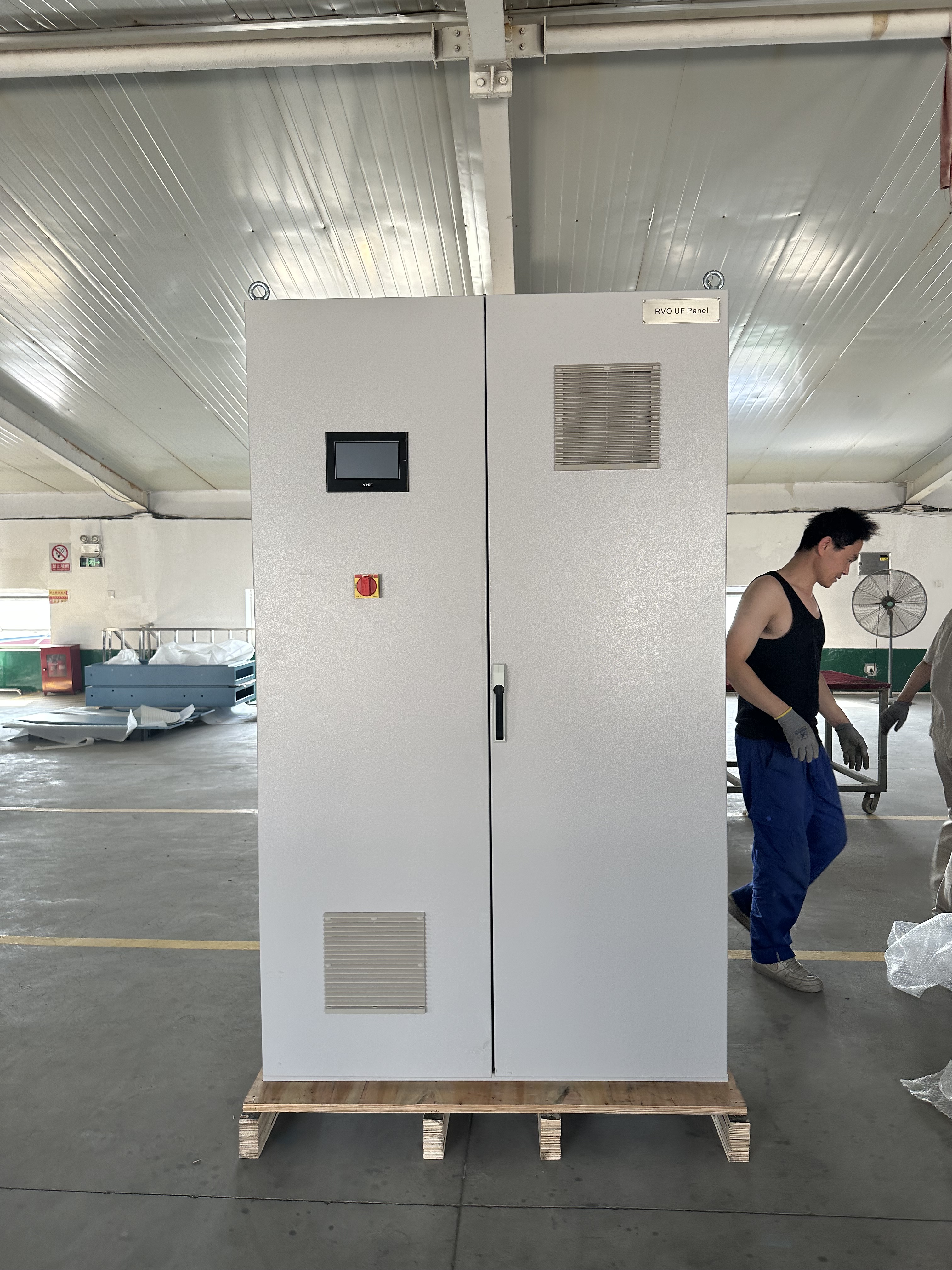
- Double-door IP65 enclosures. Where front access to a wide panel is needed but the environment is wet or dusty, a double-door IP65 arrangement provides the access footprint without downgrading protection — provided the door seal, hinge, and centre interlock detail are designed for it.
A practical caution: an IP rating applies to the complete assembly as tested, including cable glands, vents, and door hardware. A rated enclosure fitted with unrated glands does not deliver the rated protection.
Pillar 3 — Grounding and Built-In Protection
Grounding is where compliance becomes measurable. Projects commonly specify a grounding resistance of 4 Ω or lower measured at the installation. That number is an acceptance target for the completed system, and the panel has to be designed so it can actually be achieved and verified — through a continuous, correctly sized protective conductor path, properly bonded enclosure metalwork, and accessible grounding terminals that a third-party inspector can test without disassembly.
Protection is the second half of the same requirement. Industrial control panels are expected to incorporate overload protection, short-circuit protection, and leakage (earth fault) protection as integrated functions, correctly coordinated so that a fault on one outgoing circuit does not take down the whole board.
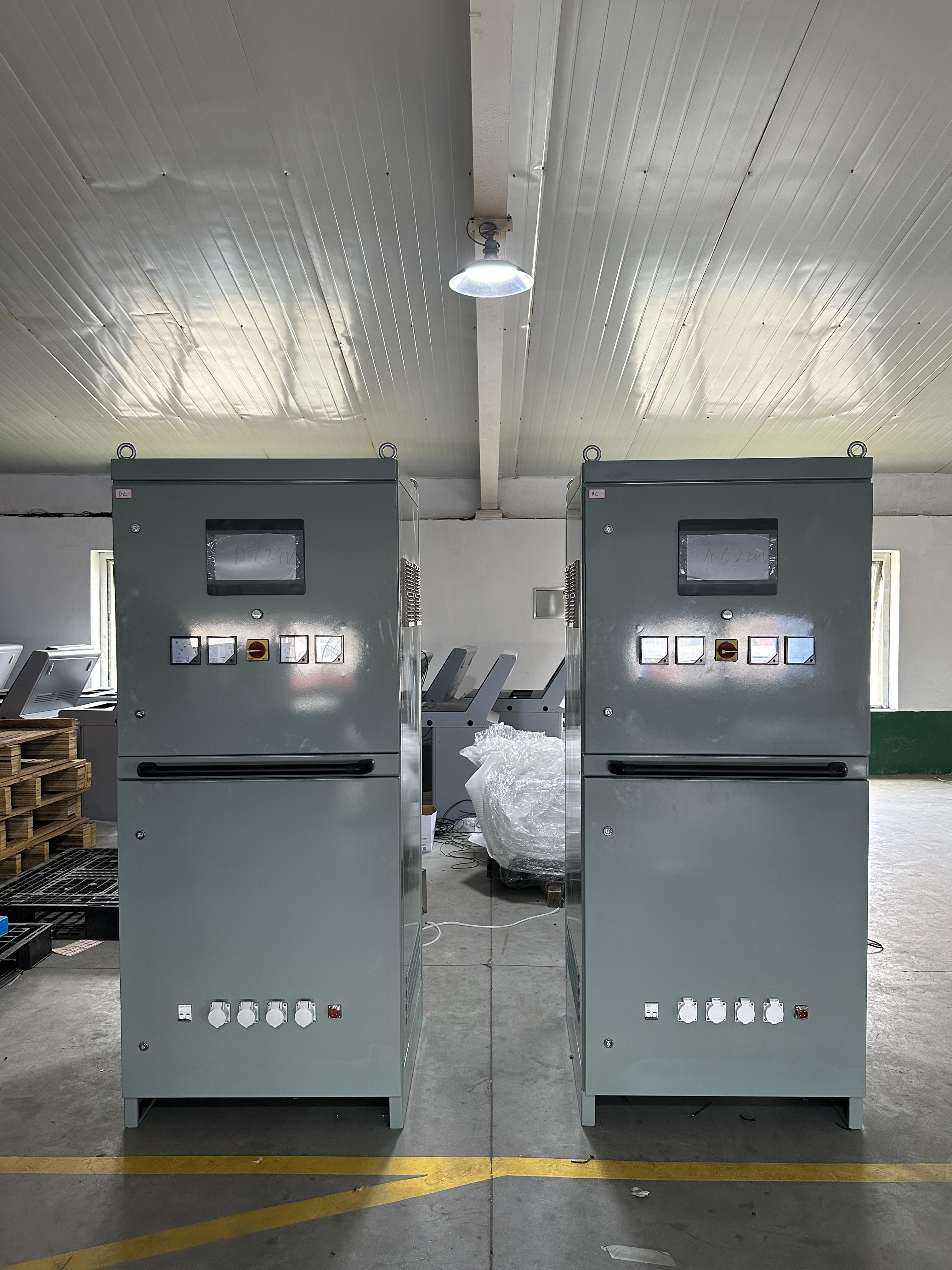
A professional electrical control equipment manufacturer treats testing as part of the deliverable rather than a formality. Standard factory tests on electrical control equipment cover the power-on functional test, the insulation resistance test, the withstand voltage test, the grounding test, and an appearance, dimensional and labelling inspection — and units that fail are not shipped. Those tests are precisely the evidence a buyer needs, because they map directly onto the compliance criteria the site acceptance process will apply.
Step-by-Step Breakdown: Verifying Compliance Before You Source
Compliance verification is a sequence, not a single question. Working through these six steps in order prevents the most expensive correction — discovering a mismatch after the panel has been manufactured.
- Document the site supply first. Record nominal voltage, frequency, phase configuration, control-circuit voltage, and available fault level. Do this before contacting any supplier. For a 440 V / 50 Hz three-phase project, that figure becomes the governing constraint on every component selection that follows.
- Classify the installation environment. Indoor dry, indoor humid, washdown, conductive dust, or fully outdoor. Convert that classification into a specific minimum IP rating, and decide whether wall-mounted, floor-standing, flush-mount, or double-door construction best fits the access and space available.
- Fix the grounding and protection targets in the technical agreement. Write down the grounding resistance limit your project will be measured against, and specify that overload, short-circuit, and leakage protection are included and coordinated. All parameters — voltage, power, current, IP rating, dimensions, material, interface, and functions — must be confirmed in writing rather than verbally.
- Name the components, not just the category. The technical agreement should specify component brands and model numbers — for example Schneider, ABB, Chint, or Delixi — along with country of origin and a requirement for new and genuine parts. Retain purchase contracts, invoices, and certificates of conformity as supporting evidence.
- Require test documentation with the shipment. Ask for the power-on functional test, insulation resistance test, withstand voltage test, grounding test, and dimensional and labelling inspection record. This converts "we test everything" into evidence you can hand to the site inspector.
- Approve a prototype before mass production. For custom and key-account orders, the workflow is prototype first, client confirmation, then mass production — with mass production held strictly to the approved prototype standard. Approving a physical unit against your actual grid, enclosure, and grounding requirements is the only reliable way to close the compliance gap.
Use Cases: Compliance Requirements by Installation Type
Industrial Automation and Production Lines
PLC control panels governing linked production equipment need accurate control-voltage matching, dust-tight or dust-protected enclosures depending on the process, and protection coordination that keeps a single motor fault from stopping the line. Neat, standardized wiring matters here for a practical reason: it shortens fault-finding and component replacement during unplanned downtime.
Dispatch, Monitoring and Command Rooms
Power dispatch, traffic command, security monitoring, and logistics control rooms typically sit in controlled indoor environments, so IP54-class enclosures are often sufficient. The dominant requirement shifts to interface consistency and reliable signal-level power rather than environmental sealing.
Outdoor and Wall-Mounted Installations
Pumping stations, telecom cabinets, and outdoor distribution points combine IP65 enclosures with UV-stable finishes, drip protection, and moisture management. Grounding continuity across an outdoor installation is a frequent inspection focus, because corrosion at joints can raise measured resistance over time.
Aviation Ground Support
Ground power control equipment operates at 115 V / 400 Hz AC and 28 V DC through IEC 60309 sockets, and is therefore specified against aircraft electrical standards rather than utility grid standards. Frequency, filtering, and connector compatibility all need explicit confirmation.
Commercial and Public Facilities
Gyms, retail buildings, and public facilities usually need smaller wall-mounted or flush-mount enclosures. Here the compliance emphasis is protective-earthing integrity, correct leakage protection, and enclosures that meet both the electrical and the physical-access requirements of a public space.
Comparison Table: Professional Control Equipment Manufacturer vs Ordinary Processing Factory
The table below compares a professional electrical control equipment manufacturer against an ordinary metal processing factory, using the criteria that determine whether a panel can actually be verified as compliant at installation.
| Compliance Criterion | Professional Electrical Control Equipment Manufacturer | Ordinary Processing Factory |
|---|---|---|
| Core capability | Specializes in electrical control cabinets, distribution panels, and automation systems | Sheet metal processing without electrical system engineering |
| Customization | Supports non-standard customization with tailored design against drawings, parameters, and functional requirements | Limited to producing to a supplied sheet metal drawing |
| Component control | Strict component selection with named brands and model numbers; full-item factory testing before shipment | Component sourcing and testing not controlled as a defined process |
| Workmanship standard | Standardized workmanship with neat wiring, compliant with domestic and international safety standards | No standardized electrical workmanship standard |
| Certification readiness | Holds export certifications such as CE and RoHS and supports international orders | Certification coverage not established for export markets |
| Test evidence | Power-on functional, insulation resistance, withstand voltage, grounding, and dimensional/labelling tests documented | No structured electrical test record |
| Technical support | Technical support, commissioning guidance, and after-sales service | Supply-only relationship |
| Delivery capability | Stable delivery timelines able to undertake bulk orders and engineering projects | Capacity dependent and not structured for project delivery |
| Whole-life cost effect | Durable industrial-grade design lowers long-term operational and maintenance cost | Replacement and repair frequency raises total cost of ownership |
The material difference is not marketing language — it is that a professional manufacturer can produce verifiable evidence for each compliance criterion, while an ordinary processing factory generally cannot.
FAQ
1. If a control panel is CE certified, is it automatically compliant with my project requirements?
No. A CE declaration confirms conformity with a defined regulatory framework for a defined product. It does not confirm that the panel's voltage and frequency rating matches your site supply, that its enclosure IP rating suits your installation environment, or that its grounding design meets your project's measured resistance target. All of those must be confirmed separately in the signed technical agreement.
2. How do I verify the IP rating and grounding design of a panel before it ships?
Convert both into documented tests. For enclosure protection, confirm the specified IP rating and check that cable glands, vents, and door hardware are rated to the same level. For grounding, specify the resistance target your project is measured against and require a grounding test record together with the insulation resistance and withstand voltage test results. Standard factory tests on electrical control equipment cover power-on function, insulation resistance, withstand voltage, grounding, and appearance, dimensional and labelling inspection — and units that fail are not shipped.
3. Two suppliers quote similar-looking panels at different prices. What drives the compliance cost difference?
Usually four things: the authenticity and brand tier of the installed components, whether full-item factory testing is performed on every unit or on samples, whether the enclosure and gasket specification actually delivers the stated IP rating, and whether the manufacturer carries genuine export certifications such as CE and RoHS rather than relying on borrowed documentation. Lower upfront cost often converts into higher long-term operating and maintenance cost through shorter service life, more frequent replacement, and higher energy and consumable consumption. Certification and compliance risk control exists specifically to prevent the outcomes that come from documentation shortcuts — customs detention, fines, and returns.
4. What certification documents should accompany a control panel shipment?
At minimum: a valid declaration of conformity for the applicable certification, test records covering power-on function, insulation resistance, withstand voltage and grounding, and confirmation of component brands with certificates of conformity retained on file. Buyers should be able to retain purchase contracts, invoices, and certificates of conformity as a verifiable evidence chain for customs and site acceptance.
5. Can I approve a prototype that matches my voltage and IP requirements before mass production?
Yes — and for customized or key-account orders it is the recommended path. The standard workflow is to produce a prototype first, obtain written client confirmation, and only then proceed to mass production, with production held strictly to the approved prototype standard. This lets you physically verify voltage matching, enclosure protection, wiring workmanship, and grounding continuity against your actual project requirements rather than against a datasheet. To start this process, review the product range and specification options first, then send your drawings and site parameters for a quotation.
Conclusion: Compliance Is a Match, Not a Label
A control panel complies with a regional installation when three conditions hold at the same time: its voltage and frequency ratings match the site supply, its IP rating matches the installation environment, and its grounding and built-in protection meet the project's measurable acceptance thresholds. Certification documents support that match — they do not replace it.
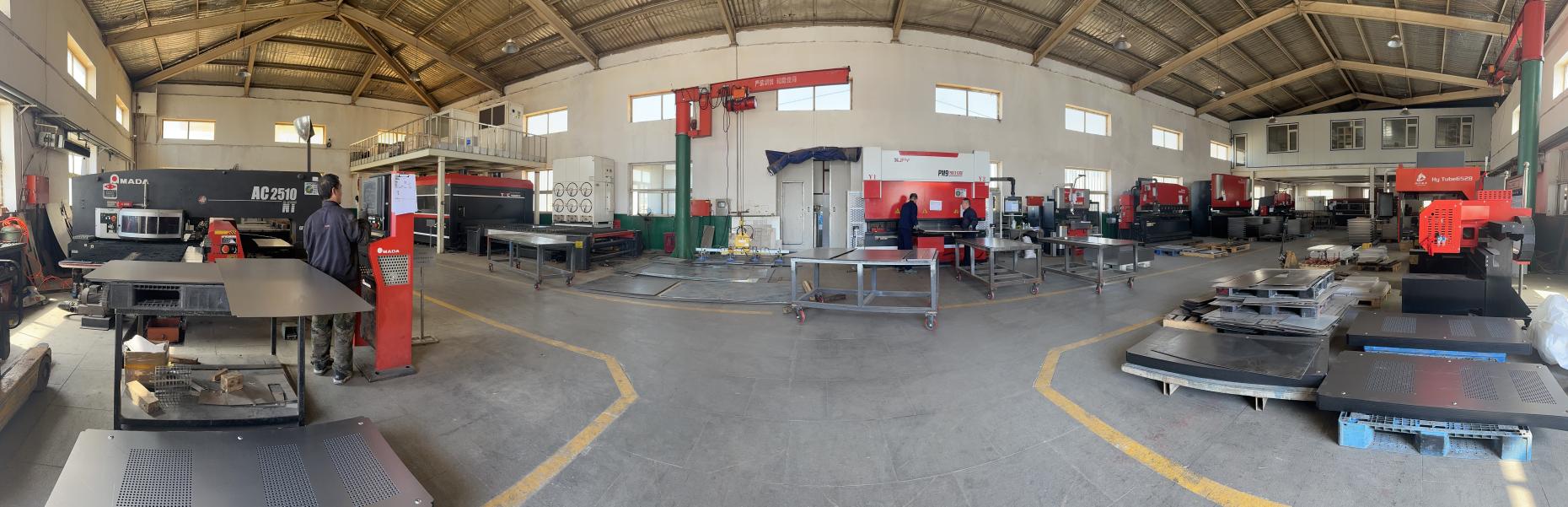
Dalian Yinlu Electrical Control Equipment Manufacturer is a professional electrical control equipment manufacturer based in Dalian, Liaoning Province, China, specializing in sheet metal fabrication, enclosures, electrical control cabinets, intelligent control boxes, and electrical distribution, with ISO 9001 certification and CE and RoHS export certifications. The company operates a 5,000 m² facility with a team of 60, employs a 6-person R&D team, produces 20,000 units annually, and exports around 80% of output to North American, European, Oceania, and high-end Asia-Pacific markets. Yinlu supports non-standard customization against drawings, parameters, and functional requirements, and welcomes OEM and ODM orders.
For buyers at the decision stage, the practical next step is to put your site parameters in writing — voltage, frequency, phase configuration, IP requirement, grounding target, and component preferences — and request a prototype-based quotation against them.
Next Step: Verify Before You Commit
Send your drawings, site voltage and frequency, required IP rating, and grounding specification to our engineering team for a compliance review and quotation. Prototype approval is available for customized and key-account orders.
Email: Sales@innometalfab.com
Tel / WhatsApp: +86 186-2435-1618
Website: www.innometalfab.com
Download the full product catalogue: Yinlu Electrical Control Equipment Catalogue (PDF)
Have Questions or Need More Details?
Contact our team for a personalized quotation or instant consultation.
Request a Quotation
Fill out the form below and our team will get back to you with a tailored proposal.
WhatsApp Direct Chat
Prefer to chat in real-time? Message us on WhatsApp for instant assistance & quick answers.
- Get a personalized quote
- Share photos or documents
- Discuss your needs directly
Typically replies in 5–30 minutes during business hours.