
Choosing the Right Electrical Enclosure: A Type-by-Type Guide for Industrial and Outdoor Projects
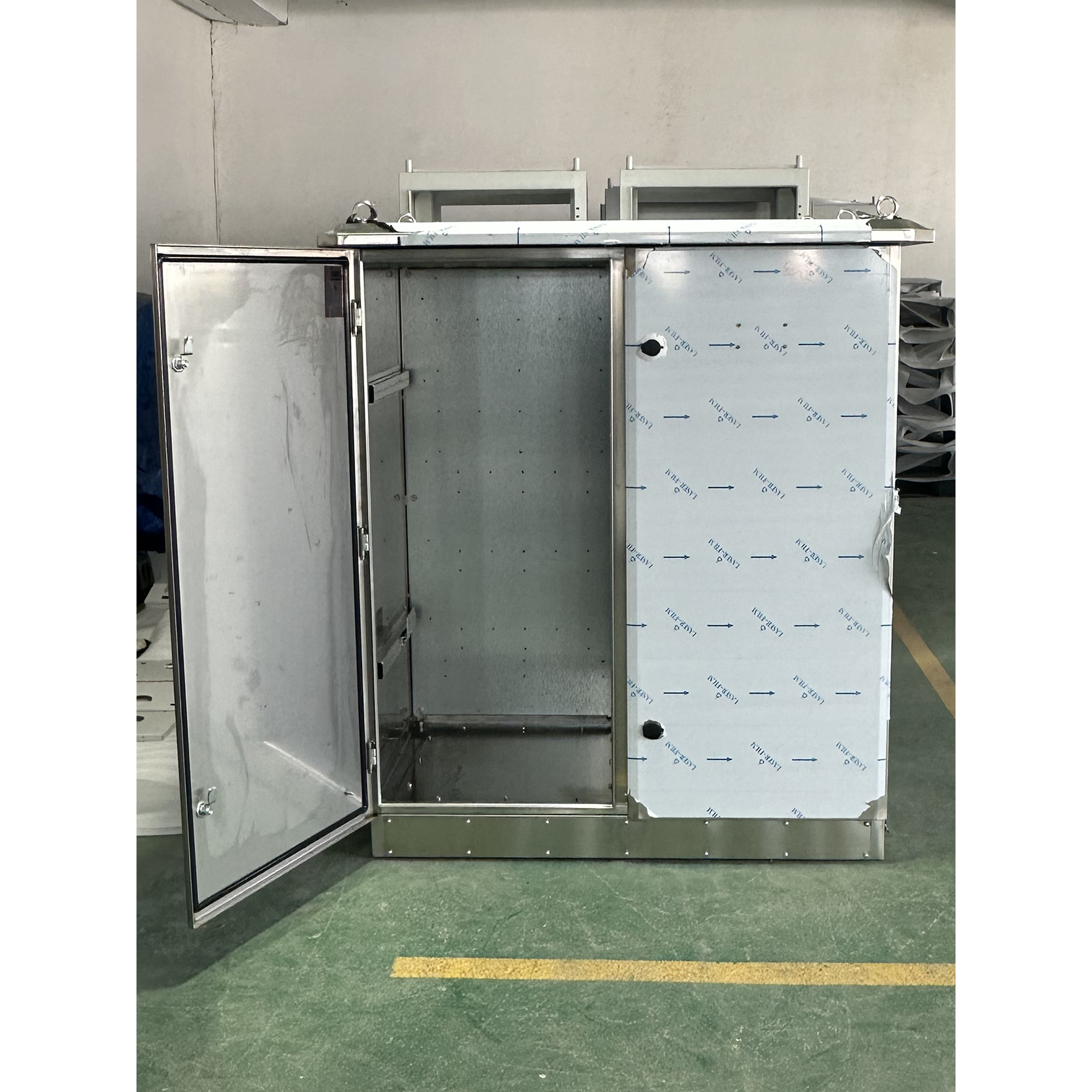
Stainless steel electrical enclosures provide corrosion-resistant protection for outdoor and industrial equipment.
An electrical enclosure protects control components, wiring, and instrumentation from dust, water, impact, and corrosion. The right choice depends on the environment, the equipment inside, the protection rating, and the level of customization required. This guide explains the main enclosure types, the meaning of IP ratings, material options, and how to match them to real project scenarios.
What Is an Electrical Enclosure and Why Does It Matter?
An electrical enclosure is a protective housing designed for electrical, electronic, and automation equipment such as PLCs, circuit breakers, terminals, drives, instruments, and communication devices. It provides physical protection against dust, water, impact, and corrosive elements, while also enabling organized wiring, electrical safety, and easier maintenance.
For industrial buyers, the enclosure is not just a metal box. It determines whether sensitive components survive in a workshop, a chemical plant, a coastal site, or an outdoor installation. A poorly selected enclosure can lead to equipment failure, unsafe operation, and high maintenance costs.
The Global Electrical Enclosure Market in Brief
The global electrical enclosure market was valued at approximately USD 14.02 billion in 2024 and is projected to reach USD 23.65 billion by 2032. Metallic enclosures, including stainless steel and carbon steel, accounted for about 65% of global demand in 2025. Asia Pacific held the largest regional share at 36% in 2025, supported by industrial automation and renewable energy investment. Wall-mounted enclosures are expected to remain a dominant segment through 2035 because of their compact design for smaller equipment installations.
These figures reflect a market that is growing with industrial automation, renewable energy, and outdoor infrastructure. For buyers, the practical question is not just which brand to choose, but which type of enclosure fits the project.
Main Types of Electrical Enclosures
Enclosure selection usually starts with the installation form and the environment. Below are the most common categories used in industrial and outdoor projects.
Wall-Mounted Electrical Enclosures
Wall-mounted enclosures are compact and installed directly on walls or equipment structures. They are suitable for applications where floor space is limited and the internal components are relatively small.
For example, the Wall-Mounted Electrical Control Box from Yinlu is made of cold rolled steel, with 304 stainless steel available as a customization option. It offers a customizable protection grade of IP54/IP55 and is used in rail transit, building control, and outdoor landscape lighting control. The Wall-mounted Instrument Box is also available in 304 stainless steel as standard, with 316 stainless steel for corrosive or coastal environments, and offers IP55 protection.
Floor-Standing Enclosures
Floor-standing enclosures are larger cabinets placed directly on the ground. They are used when the equipment is too large for wall mounting, or when multiple components need to be integrated in one cabinet.
Examples include the PLC Electrical Enclosure, constructed from cold rolled steel with IP54 protection and floor-mounted installation, and the Free Standing Modular Enclosure (model YL0923-3), made of 304/316 stainless steel. Floor-standing enclosures can accommodate 19-inch racks, industrial PCs, HMI screens, PLCs, switches, power modules, and terminal blocks.
Outdoor Electrical Enclosures
Outdoor enclosures are designed for exposure to sun, rain, snow, dust, and temperature changes. They must provide a higher degree of sealing and weather resistance.
One example is the Rittal-style Free-standing Outdoor Control Cabinet, made of cold rolled steel with an IP55/IP65 protection grade, and floor-mounted installation. Another is the Outdoor Weatherproof Control Enclosure, a wall-mounted design with IP66 protection, commonly used for PV combiner boxes, hydrological monitoring, communication base stations, and street light control.
The Stainless Steel Double-Door Outdoor Cabinet provides IP65 protection and is built for highly corrosive and harsh outdoor environments, including communication base stations, energy storage power stations, chemical plants, and coastal projects.
Stainless Steel Enclosures
Stainless steel enclosures are specified when corrosion resistance and hygiene matter. They are often used in chemical, food, pharmaceutical, water treatment, marine, and coastal applications.
Yinlu offers a range of stainless steel products, including the Stainless Steel Pedestal Box (316 stainless steel, IP55/IP65, pedestal floor-mounted), the Stainless Steel Junction Box (IP65, floor-standing), and the Stainless Steel Non-Standard Custom Enclosure (IP65, UV-resistant, anti-aging, and acid rain-proof).
Electronics and Instrument Enclosures
Instrument enclosures are designed for monitoring and control equipment such as indicators, meters, PLCs, and communication modules. They often include custom cutouts for instrument windows, buttons, and cable inlets.
Examples include the Multi-meter Cupboard, the Wall-mounted Instrument Box, and control consoles such as the Industrial Operator Console and the Sloped Industrial Control Console.
How to Read IP Ratings: IP54, IP55, IP65, and IP66
IP (Ingress Protection) ratings define how well an enclosure resists dust and water. The standard used internationally is IEC 60529. The first digit indicates solid particle protection; the second digit indicates water protection.
- IP54: Dust-protected and splash-proof. Suitable for indoor workshops and control rooms.
- IP55: Dust-protected and protected against water jets. Common for indoor-outdoor transition environments.
- IP65: Dust-tight and protected against powerful water jets. Suitable for outdoor exposed applications.
- IP66: Dust-tight and protected against powerful water jets, with a higher level of water resistance than IP65. Used in demanding outdoor environments.
The table below shows how Yinlu enclosure models are distributed across protection levels.
| Protection Level | Typical Enclosure Type | Typical Installation | Common Application |
|---|---|---|---|
| IP54 | PLC Electrical Enclosure, Sloped Industrial Control Console, Industrial Monitoring Console | Floor-standing | Factory automation, control rooms, SCADA stations |
| IP55 | Wall-mounted Instrument Box, Multi-meter Cupboard | Wall-mounted | Chemical, water treatment, power distribution |
| IP65 | Stainless Steel Non-Standard Custom Enclosure, Stainless Steel Double-Door Outdoor Cabinet | Floor-standing | Outdoor communication, energy storage, coastal and chemical sites |
| IP66 | Outdoor Weatherproof Control Enclosure | Wall-mounted | PV combiner boxes, hydrological monitoring, street lighting |
Material Selection: Cold Rolled Steel vs. Stainless Steel
Material choice affects corrosion resistance, mechanical strength, cost, and cleanliness.
Cold rolled steel (CRS) is widely used for indoor and general industrial enclosures. It is strong, formable, and cost-effective. After phosphating and electrostatic powder coating, it provides good protection against rust and wear.
Stainless steel is used for outdoor, coastal, chemical, food, and pharmaceutical environments where corrosion resistance is critical. 304 stainless steel resists atmospheric and fresh water corrosion. 316 stainless steel resists salt spray and acid corrosion, making it suitable for coastal or chemical scenarios.
The Stainless Steel Pedestal Box, for example, is constructed from 316 stainless steel with a brushed finish. The Wall-mounted Instrument Box uses 304 as standard and 316 for corrosive environments. For projects involving seawater exposure or chemical processing, 316 is the more appropriate specification.
Customization in Electrical Enclosures
Many industrial projects require non-standard dimensions, special cutouts, specific colors, or unique internal layouts. Customization demand is significant in the market. According to third-party research, roughly 18% of enclosure buyers in 2024 demanded highly customized solutions, driving demand for OEM and ODM capabilities.
Yinlu supports OEM and ODM orders. Products such as the Stainless Steel Non-Standard Custom Enclosure and the Wall-Mounted Electrical Control Box are customizable. The company's R&D team consists of 6 engineers, and the manufacturing facility covers 5000m², with around 60 employees.
Step-by-Step Selection Process
Step 1: Define the Installation Environment
Determine whether the enclosure will be installed indoors, outdoors, in a workshop, or in a corrosive area such as a coastal site or chemical plant. This decides the minimum IP rating and material requirement.
Step 2: Identify the Internal Equipment
List the components: PLC, power supply, circuit breakers, terminals, HMI, sensors, or communication modules. Consider their dimensions, heat generation, and cable requirements.
Step 3: Choose the Mounting Method
Select wall-mounted, floor-standing, or pedestal-mounted based on available space and accessibility. For outdoor ground installation, floor-standing cabinets with sturdy construction are preferred.
Step 4: Confirm the Protection Rating
Match the IP rating to the environment. Use at least IP55 for sheltered industrial areas, IP65 for outdoor exposed areas, and IP66 for highly demanding outdoor or washdown environments.
Step 5: Define Customization Needs
Prepare the required dimensions, cutouts, color, internal mounting, cable entry, locks, and accessories. Share this information with the manufacturer during the inquiry phase.
Use Cases Across Industries
Chemical and Petrochemical Processing
These environments involve corrosive gases, moisture, and washdown. Stainless steel enclosures such as the Stainless Steel Junction Box or the Wall-mounted Instrument Box, with IP55/IP65 protection, are commonly used for instrumentation and electrical distribution.
Food and Pharmaceutical Facilities
Hygiene requirements favor stainless steel surfaces that are easy to clean. The brushed finish of Yinlu stainless steel enclosures reduces residue retention and supports cleaning routines.
Outdoor Communication and Energy Storage
Communication base stations and energy storage systems are often installed outdoors. The Stainless Steel Double-Door Outdoor Cabinet, with IP65 protection and weather-resistant construction, is designed for such scenarios.
Industrial Automation and Factory Floors
Workshop environments require dust protection, splash protection, and robust mechanical strength. The PLC Electrical Enclosure and Free Standing Modular Enclosure are designed to house PLCs, HMIs, and industrial PCs in factory automation lines.
Rail Transit and Public Infrastructure
Station lighting, tunnel fan control, and platform screen door systems use wall-mounted control boxes with IP54/IP55 ratings. The Customized Wall-Mounted Electrical Control Box is an example of a product built for this segment.
Comparison: Wall-Mounted vs. Floor-Standing vs. Outdoor Stainless Steel Enclosures
| Criteria | Wall-Mounted Enclosure | Floor-Standing Enclosure | Outdoor Stainless Steel Enclosure |
|---|---|---|---|
| Installation | Wall or equipment mounting | Floor mounting with feet or casters | Floor mounting with weatherproof design |
| Typical Protection | IP54 / IP55 | IP54 / IP55 | IP65 / IP66 |
| Material | Cold rolled steel or 304/316 stainless steel | Cold rolled steel or 304/316 stainless steel | Stainless steel preferred |
| Space Requirement | Small footprint | Large footprint | Large footprint |
| Typical Use | Control boxes, instrument boxes, local operation | PLC cabinets, modular enclosures, VFD cabinets | Energy storage, telecom, coastal and chemical outdoor |
| Key Advantage | Saves floor space | High internal capacity | Corrosion resistance and weather protection |
Quality and Manufacturing Considerations
Enclosure quality depends on material thickness, surface treatment, door sealing, grounding, and internal configuration.
Yinlu applies phosphating derusting and electrostatic powder coating for cold rolled steel products, and brushed finish for stainless steel products. Many cabinets use EPDM sealing strips and stainless steel handle locks. Grounding requirements include cabinet grounding with resistance not exceeding 4Ω, and grounding bonding between the door and cabinet body on many models.
The company operates from a 5000m² manufacturing facility with approximately 60 employees and a 6-person R&D team. Its annual output is about 20,000 units, with roughly 80% exported to North America, Europe, Oceania, and high-end Asia-Pacific markets. Yinlu has obtained ISO 9001 certification and welcomes OEM and ODM orders.
FAQ
What is the difference between IP65 and IP66 enclosures?
Both IP65 and IP66 enclosures are dust-tight. The difference is in water protection. IP65 enclosures withstand powerful water jets, while IP66 enclosures withstand more powerful jets, making them suitable for harsher outdoor conditions. Yinlu offers IP65 stainless steel outdoor cabinets and an IP66 Outdoor Weatherproof Control Enclosure for demanding outdoor applications.
Which material should I choose: cold rolled steel or stainless steel?
Cold rolled steel with powder coating is suitable for indoor and general industrial environments where the atmosphere is not highly corrosive. Stainless steel, especially 316 stainless steel, is recommended for outdoor, coastal, chemical, and food processing environments because it resists salt spray and acid corrosion.
Can I get a custom electrical enclosure for a specific project?
Yes. Yinlu supports OEM and ODM orders and offers customizable models across its product range. Customization can include size, material, protection rating, cutouts, color, internal mounting, and accessories. The R&D team of 6 engineers can assist with technical requirements.
Are these enclosures suitable for outdoor communication and energy storage applications?
Yes. Yinlu's Stainless Steel Double-Door Outdoor Cabinet and Stainless Steel Non-Standard Custom Enclosure are designed for communication base stations, energy storage power stations, outdoor PV systems, chemical industry parks, and coastal ports. They offer IP65 protection, UV resistance, and anti-aging properties for long-term outdoor exposure.
How do I request a quote or sample for a custom enclosure project?
To begin, contact Yinlu with your project requirements including environment, equipment list, dimensions, and protection rating. A sample or quotation can be arranged based on your specification.
Need help selecting the right electrical enclosure for your project?
Contact Yinlu at Sales@innometalfab.com or +86 186-2435-1618 for technical consultation, samples, or a quote.
Have Questions or Need More Details?
Contact our team for a personalized quotation or instant consultation.
Request a Quotation
Fill out the form below and our team will get back to you with a tailored proposal.
WhatsApp Direct Chat
Prefer to chat in real-time? Message us on WhatsApp for instant assistance & quick answers.
- Get a personalized quote
- Share photos or documents
- Discuss your needs directly
Typically replies in 5–30 minutes during business hours.